Lauren Iida
Cascadia Featured Story - Published March 6, 2026
History on the Cutting Room Floor
Artist Lauren Iida on Storytelling, History, and Responsibility
In Mobius Art Gallery at Cascadia College, entire histories unfold from a single sheet of paper.
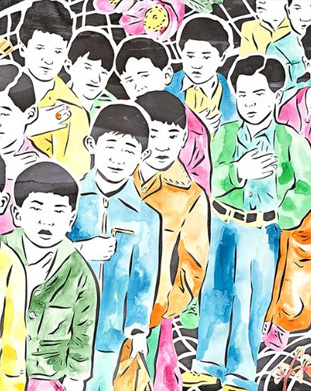
In her show The Sleep of Reason Produces Monsters, running through March 12, Lauren Iida fills the gallery with bold, hand-cut works carved from single sheets of paper, some intimate in scale and others spanning entire walls.
Layered with ink and watercolor, the pieces are graphic and direct. Scenes feel immediate. They push viewers to consider what is remembered, what is excised, and who gets to decide.
I’ve always focused my art practice on storytelling.
When I sat down recently with the artist, she spoke with a characteristic conviction about artist-activists.
“I’m happy to be placed in that category,” she said. “I don’t think anyone has a choice anymore to make that decision.”
When history feels contested or unsettled, artists carry a particular responsibility. “I’m trying to be as proactive as possible. It’s the job of artists to do that right now.”
Her own family history informs that stance. A fourth-generation Japanese American whose relatives were incarcerated during World War II, Iida grew up with a legacy that was not openly discussed.
She began investigating it on her own; eventually, an elderly great aunt, recognizing the depth of Iida’s commitment, began entrusting her with photos and stories from that time.
“I’ve always focused my art practice on storytelling,” Iida told me. There was never a phase of simply making pretty things, even as a small child with a crayon. The stories — of displacement, protest, survival — have always been central.
There’s no healing component for me in making art about incarceration. I make the art to honor the work my community elders have done.
She resists the idea that her work is therapeutic. In fact, the question leaves her feeling a little prickly.
“There’s no healing component for me in making art about incarceration,” she said. “I make the art to honor the work my community elders have done. It’s become more like an obligation.”
In the Mobius exhibition, that sense of obligation intersects with another theme that has been surfacing more in her recent work: the loss of childhood innocence.
Several pieces feature children confronting systems and events far larger than themselves. The images are steady and unsentimental.
I’m trying to be as proactive as possible. It’s the job of artists to do that right now.
In times when public narratives shift and histories are debated, Iida believes artists have a vital role in preserving communal memory. In response, her own art has been shifting lately, working less with the fragility of paper and more with harder, more permanent materials such as metal and glass.
From April 22 through 25, 2026, you’ll have an exciting opportunity to watch Lauren Iida at work at the Hot Shop at the Museum of Glass in Tacoma as their Visiting Artist in Residence. A new glass piece she creates during her residency will be added to the museum's permanent collection.
At Cascadia College, Iida’s paper stories challenge us to consider what has been cut away from the stories we tell, and what responsibility we carry in restoring them.
***
Lauren Iida’s work is on view through September 14, 2026, in the exhibition Lost & Found: Searching for Home at the Wing Luke Museum of the Asian Pacific American Experience.
North Seattle College recently installed Iida’s The Lunch Counter as a permanent addition to the campus library. The giant, cut-paper piece depicts the 1960 Greensboro Woolworth’s sit-ins, translating a pivotal civil rights moment into stark black-and-white forms.
Additionally, you can see Iida’s work in public art around the Pacific Northwest, at the ArtX Contemporary gallery in Pioneer Square, and on her website.